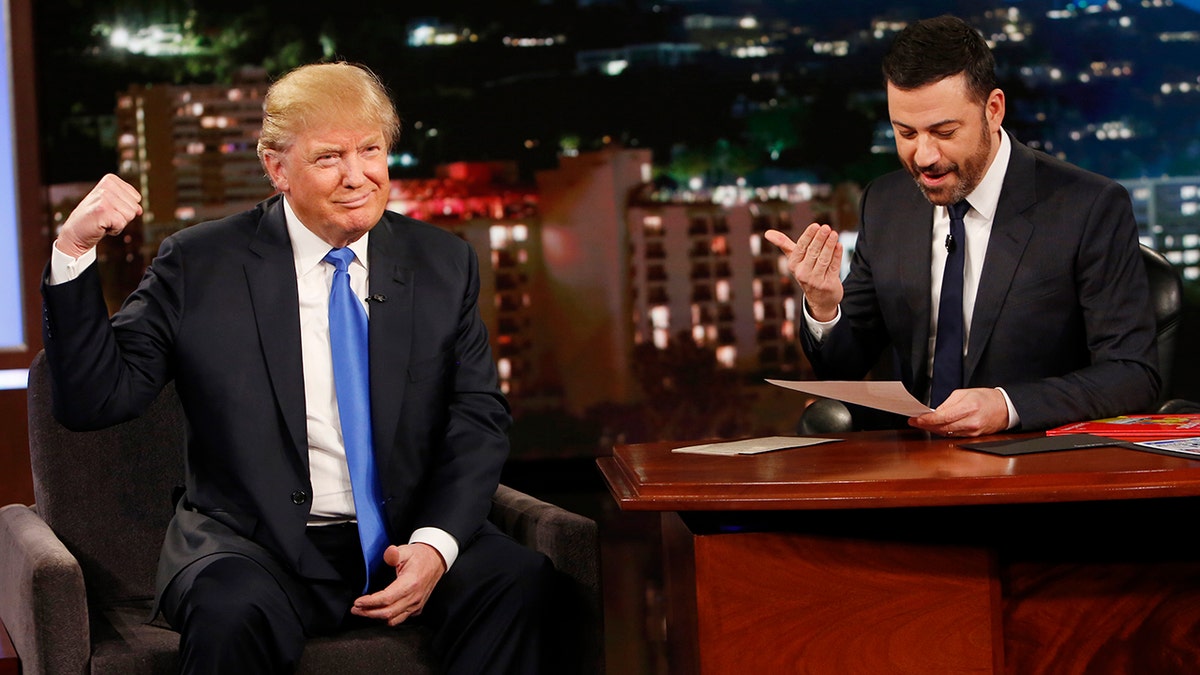
ABC isn’t backing down. Despite a familiar pattern of political backlash and public demands from Donald Trump, the network has shown no indication it will retract, apologize, or soften Jimmy Kimmel’s sharp political satire. This time, unlike previous moments of media capitulation, ABC appears resolute—marking a potential turning point in how major broadcasters respond to pressure from powerful political figures.
The latest flashpoint began with a segment on Jimmy Kimmel Live! that mocked Trump’s legal troubles and campaign rhetoric. Within hours, the former president fired off a series of attacks on social media, calling Kimmel “overrated,” “unfunny,” and accusing ABC of being part of a “rigged media machine.” He urged his supporters to boycott the network and pressured advertisers to pull funding—a playbook he’s used successfully in the past.
But this time, the response from ABC has been telling: silence, followed by continued airtime and promotional support for Kimmel’s show. No reprimands. No distancing statements. No schedule changes. Just business as usual.
That quiet defiance may be more significant than any press release.
The History of Media Capitulation Under Trump
Trump’s relationship with the media has always been transactional: praise allies, punish critics. Over the years, several networks and personalities have folded under the weight of his complaints, particularly when boycotts and advertiser pressure followed.
Remember when Univision dropped Trump’s Miss Universe pageant in 2015 after his controversial remarks about immigrants? That was a rare early win for accountability. But more often, the opposite happened.
Fox News, once a frequent target of Trump’s ire during the 2016 primaries, quickly realigned its tone when he became the nominee. Personal attacks ceased; coverage shifted to amplification. CNN, under constant attack, sometimes adjusted story framing to avoid being labeled “fake news.” Even late-night hosts have occasionally watered down jokes after network executives expressed concern.
And in 2020, when late-night shows began criticizing Trump’s pandemic response more aggressively, several networks received internal memos urging “balance.” Kimmel himself faced mild pushback after a particularly biting segment about the administration’s handling of the crisis. But he pushed back—and ABC, quietly, let him keep going.
Now, in 2024, the network’s stance seems less tentative. They’re not just allowing Kimmel’s commentary—they’re amplifying it.
Why ABC Is Holding Its Ground Now
Several factors explain why ABC is no longer caving to Trump’s demands.
1. Kimmel’s Ratings Have Never Been Stronger Despite—or perhaps because of—the political heat, Jimmy Kimmel Live! has seen a surge in viewership. Digital clips of his Trump segments regularly rack up millions of views. The show’s YouTube channel has grown 40% in the last 18 months, with politically charged content driving engagement.
A recent monologue dissecting Trump’s legal indictment generated over 8 million views across platforms in 72 hours. Advertisers aren’t fleeing—they’re lining up. Brands like Hyundai, Amazon, and Bank of America have increased their late-night ad buys, recognizing that controversy drives attention.

2. The Audience Has Polarized—And ABC Knows Its Base ABC’s core audience for late-night programming skews younger, urban, and politically progressive. Attempting to appease Trump would alienate the very viewers who keep the show relevant. Unlike broadcast news divisions, which often chase neutrality, entertainment programming thrives on point of view.
Kimmel’s brand has evolved from light celebrity interviews to sharp political satire. ABC has leaned into that shift, positioning him as a counterbalance to figures like Tucker Carlson and Sean Hannity. The network isn’t trying to be all things to all people—it’s doubling down on its identity.
3. Legal and Ethical Precedents Are Shifting
After years of dealing with misinformation, defamation lawsuits, and political interference, networks are more cautious about yielding to pressure that smells of intimidation.
The Dominion Voting Systems lawsuit against Fox News served as a wake-up call: bending to political whims can have serious legal consequences. Networks are now more likely to vet internal decisions through legal and compliance teams before making concessions.
ABC’s legal team likely advised that retracting or censoring commentary based on a public figure’s complaints could open the door to free speech challenges. Standing firm, even quietly, is now seen as the safer legal posture.
The Anatomy of Kimmel’s Trump Segments
What exactly has drawn Trump’s ire—and kept ABC loyal?
Kimmel doesn’t just mock Trump’s appearance or rhetoric. He dissects policy failures, legal vulnerabilities, and campaign inconsistencies with a mix of humor and investigative rigor.
Take one recent segment where Kimmel used a whiteboard to diagram Trump’s hush money trial, comparing it to a high school cheating scandal. The approach was accessible, factual, and scathing—without descending into personal attacks.
Another show featured a mock “Trump Legal Tracker” scoreboard, tallying indictments, court dates, and potential prison time—all set to the Jeopardy! theme. The bit went viral, but more importantly, it distilled complex legal developments into digestible content.
These segments walk a fine line: they’re critical without being hysterical, funny without being frivolous. That balance is key to ABC’s support. Kimmel isn’t ranting—he’s informing through satire, a tradition rooted in The Daily Show, Saturday Night Live, and Late Night with David Letterman.
Past Concessions ABC Could Have Made—But Didn’t
In previous years, ABC might have responded to Trump’s attacks with some combination of the following:
- Issuing a “neutral” statement: “We respect all viewpoints…”
- Pulling the segment from digital platforms
- Moving Kimmel’s show to a later timeslot
- Reducing promotional airtime
- Pressuring Kimmel to tone down his language
None of that has happened.
Instead, ABC has continued to run full promos for Kimmel during Good Morning America and World News Tonight. The network even featured a behind-the-scenes clip of the monologue team workshopping the Trump segment—effectively endorsing the process.
This isn’t just resistance. It’s institutional support.
The Broader Media Shift: Networks Reclaiming Editorial Independence
ABC’s stance is part of a larger trend. Networks are slowly reasserting their independence after years of political pressure and audience fragmentation.
- CBS has allowed Stephen Colbert greater latitude in his Trump coverage, even when segments draw backlash.
- NBC has stood by Seth Meyers’ Closer Look videos despite advertiser complaints.
- Even CNN, after years of self-censorship, has seen rising viewership for shows like Cuomo Prime Time and The Situation Room when they take a firmer editorial stance.
The message is clear: audiences crave honesty, not hedging. And in a fragmented media landscape, neutrality often reads as cowardice.
:max_bytes(150000):strip_icc()/donald-trump-jimmy-kimmel-091725-c2eb1fdbafb245238a40d0029fac1563.jpg)
Advertisers are adapting too. Major brands now use third-party reputation tools to assess the context of ad placements. They’re less likely to pull out over a single controversial segment—especially when it generates positive engagement.
What This Means for Political Satire and Free Speech
ABC’s refusal to cave sets an important precedent. When powerful figures attempt to silence criticism through public shaming and economic pressure, the response of media institutions matters.
Kimmel’s platform is entertainment, but his influence is political. By holding the line, ABC is affirming that satire is a form of speech worth protecting—even when it’s uncomfortable.
Consider the alternatives: If networks routinely yield to demands from politicians, we inch closer to de facto censorship. If advertisers consistently abandon shows over controversy, only the bland and inoffensive survive. If late-night hosts self-censor, the public loses a vital tool for processing complex political realities.
Kimmel’s monologues do more than make people laugh. They help viewers understand the stakes of elections, legal cases, and policy debates. In an age of misinformation, that role is more important than ever.
The Bottom Line: Principle Over Pressure
ABC’s quiet defiance isn’t about heroism. It’s about strategy, audience loyalty, and institutional integrity.
They’ve calculated that standing by Kimmel strengthens their brand more than bending to Trump weakens it. They’ve recognized that their viewers value truth-telling—even when it’s delivered with a punchline.
And they’ve sent a message to other networks: you don’t have to apologize for holding power to account.
The days when a tweetstorm could force a network to retract commentary may be fading. That’s good news—not just for late-night TV, but for the future of independent media.
For creators, the lesson is clear: build trust with your audience, stay factually grounded, and let your network’s actions speak louder than its statements.
For viewers, it’s a reminder: support the voices that challenge power. Ratings matter. Engagement matters. And silence in the face of pressure? That speaks volumes.
FAQs
Why is ABC not responding to Trump’s attacks on Kimmel? ABC likely sees no benefit in engaging. Responding would amplify the controversy, and silence signals confidence in Kimmel’s content and audience support.
Has Jimmy Kimmel ever apologized for mocking Trump? Not substantively. While Kimmel has occasionally acknowledged differing opinions, he’s never retracted or apologized for political satire targeting Trump.
Are advertisers pulling out of Kimmel’s show? No. Major brands continue to advertise, and some have increased spending, recognizing the high engagement of politically charged content.
Is ABC’s support for Kimmel a political stance? It’s less about politics and more about editorial independence. ABC is protecting its creative voice and audience trust.
Could Trump legally force ABC to stop airing Kimmel’s segments? No. As a public figure, Trump has limited recourse for criticism. Satire is protected under the First Amendment.
Has Kimmel targeted other politicians the same way? Yes. Kimmel has criticized figures across the political spectrum, including Biden, McConnell, and AOC, though with differing tones based on context.
What makes Kimmel’s approach different from other late-night hosts? He blends humor with factual breakdowns, often using visuals and real-time data to make complex issues accessible—making his critiques harder to dismiss as mere opinion.
FAQ
What should you look for in ABC Stands Firm Amid Trump Pressure Over Kimmel Segment? Focus on relevance, practical value, and how well the solution matches real user intent.
Is ABC Stands Firm Amid Trump Pressure Over Kimmel Segment suitable for beginners? That depends on the workflow, but a clear step-by-step approach usually makes it easier to start.
How do you compare options around ABC Stands Firm Amid Trump Pressure Over Kimmel Segment? Compare features, trust signals, limitations, pricing, and ease of implementation.
What mistakes should you avoid? Avoid generic choices, weak validation, and decisions based only on marketing claims.
What is the next best step? Shortlist the most relevant options, validate them quickly, and refine from real-world results.